
The major players in the tech world have jumped on board the bandwagon, evidenced by Google’s investments in its Google Cardboard and Daydream VR hardware, Facebook’s acquisition of Oculus VR for a reported $2 billion, Microsoft’s pouring billions into its HoloLens project, and Apple’s purchase of Metaio. Even Snapchat is pushing forward after its first experience with its Spectacles. It is clear that innovation in VR and AR sells.
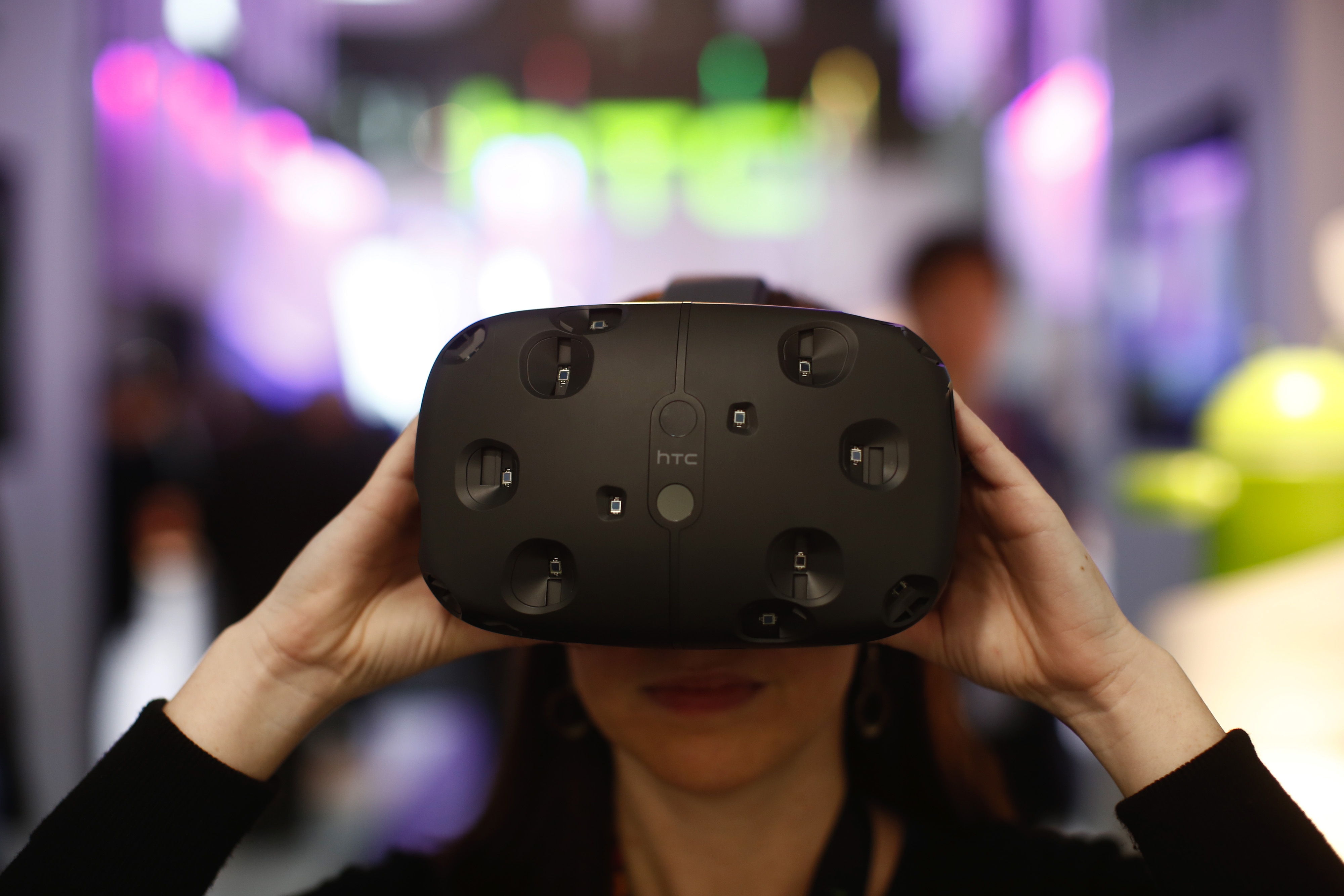
As well as simply snapping up stakes in startups, established companies are also providing incentives that could foster further innovation. Samsung, for instance, created a $150 million fund in January 2017 through its startup investment arm, Samsung NEXT. The money that this fund awards will be used to finance early-stage startups specializing in trendy tech. This follows HTC’s debut of a $100 million investment fund targeting virtual reality focused startups last April 2016.
VR and AR startups are also managing to attract more venture capital than ever before. Florida-based Magic Leap, managed to quietly raise nearly $1 billion for its AR project. Although Magic Leap’s exceptional venture funding is somewhat of an outlier, other companies have also managed to raise considerable sums, such as NextVR, which focuses on virtual reality broadcasts of live events, Jaunt which is in the emerging cinematic VR field, and Blippar, which produces a mobile AR visual search app.
One particular market has shown great interest in the growth of VR/AR tech – China. While US venture capitalists have thus far been cautious about splashing cash in the sector, preferring to wait for market consolidation, Chinese investors are pushing ahead. In 2016, 21% of AR/VR deals included a China-based investor, many of whom have participated in the industry’s largest deals. Some 200 startups are working in China’s virtual reality industry, according to IQiyi.com Inc., a unit of search engine behemoth Baidu.
Academic institutions are also serving as a valuable resource for these new technologies. One of the biggest initiatives to be launched this year is Play Labs, an accelerator for startups in augmented reality, virtual reality, and artificial intelligence, created by Bayview Labs, Seraph Group, and MIT Game Lab. Targeted at MIT students and alumni, it will offer funding, facilities, and mentorship resources for selected startups.
Much of the current hype over VR and AR has to do with a boom in the gaming sector. That is understandable, given that games were the first obvious application for these technologies, as canny developers tapped into the broad consumer base of tech enthusiasts craving enhanced entertainment experiences. It would be wrong, nonetheless, to conclude that VR and AR will be restricted to gaming for much longer. Other, potentially even more profitable applications are not far behind.
Possible applications include real estate, live events, retail, education, tourism, health care, and defense industries. Indeed, Sotheby’s now shows luxury homes to prospective buyers via virtual reality devices; Volvo uses Microsoft’s HoloLens to give consumers the opportunity to build their dream car; Atheer has created augmented reality “smart” glasses as a hands-free medical tool for doctors and Amazon has already filed patents relating to both tracking objects in a room and using projectors to transform a room into a Star Trek-esque holo-deck. The ecosystem of AR/VR specialized startups is growing, with each player purporting to address a slightly different market segment.
Amazon has already filed patents relating to both tracking objects in a room and using projectors to transform a room into a Star Trek-esque holo-deck
In 2016, AR and VR funding grew by 140% to $1.8 billion, attracting far and away more funding than any previous year. Deals volume also increased by 14% increase over 2015. Furthermore, the market is picking up steam, and fast. As early as March 2016, Bloomberg reported that the total value of software and hardware startups producing VR or AR content had likely already hit $7 billion.
But how big and how fast will the industry grow? VR and AR revenues are set to skyrocket from just over $5billion in 2016 to more than $150 billion in 2020, according to research from the International Data Corporation. But, as in all early-stage markets, growth happens along a curve, not a straight line. Thus, while there could be just a few billion dollars of revenue this year, there is huge long-term potential for AR/VR. A progressive ramp-up in 2017 and a hoped-for inflection point in 2018 are in sight.
Could anything slow down mass adoption of AR and VR technologies? Mainstream adoption does have some limiting factors which would affect how fast startups could grow. Price is the most obvious variable that determines the inflection point — companies are still seeking to cut the prices of VR and AR experiences to less than $400 in order to reach a critical mass of costumers. But for VR and AR to become more than a curio, it is also essential that we see an evolution in internet speed, headset designs, and graphics power.
Regardless, all signs indicate that the AR/VR industry is skyrocketing, and once a slightly higher level of adoption is achieved, startups that are able to come up with big ideas will be well-positioned to flourish.
