
President Xi does not do anything on a small scale, and that includes football. His strategy for football supremacy includes building 20,000 football training centers and 70,000 pitches, with a minimum of two full-size football fields per county and at least one five-a-side court for every residential compound.
The Chinese Super League is not your traditional second-tier competition enjoying healthy growth. It is a huge, government-sponsored undertaking that is artificially creating passion for a sport that, not long ago, had virtually no presence in the country. Are Chinese dreams of becoming a football superpower far-fetched? To be sure, the technical skills of most Chinese footballers remain much lower than in European or South American leagues. That helps explain why the country is still regarded as a graveyard for aging players, who are bought up by clubs’ wealthy investors at an age when they would usually be put out to pasture in the West. Yet, Beijing is betting big on its project, and it certainly possesses two major advantages: a 1.3 billion-person market and a bevy of sizable government incentives.
The US, a number of Gulf nations, and India all have, to some extent, tried to promote the beautiful game by attracting famous veterans in reasonably high numbers. China, however, is going much further, and has managed to convince players and coaches well in their prime to pack their bags and head East.
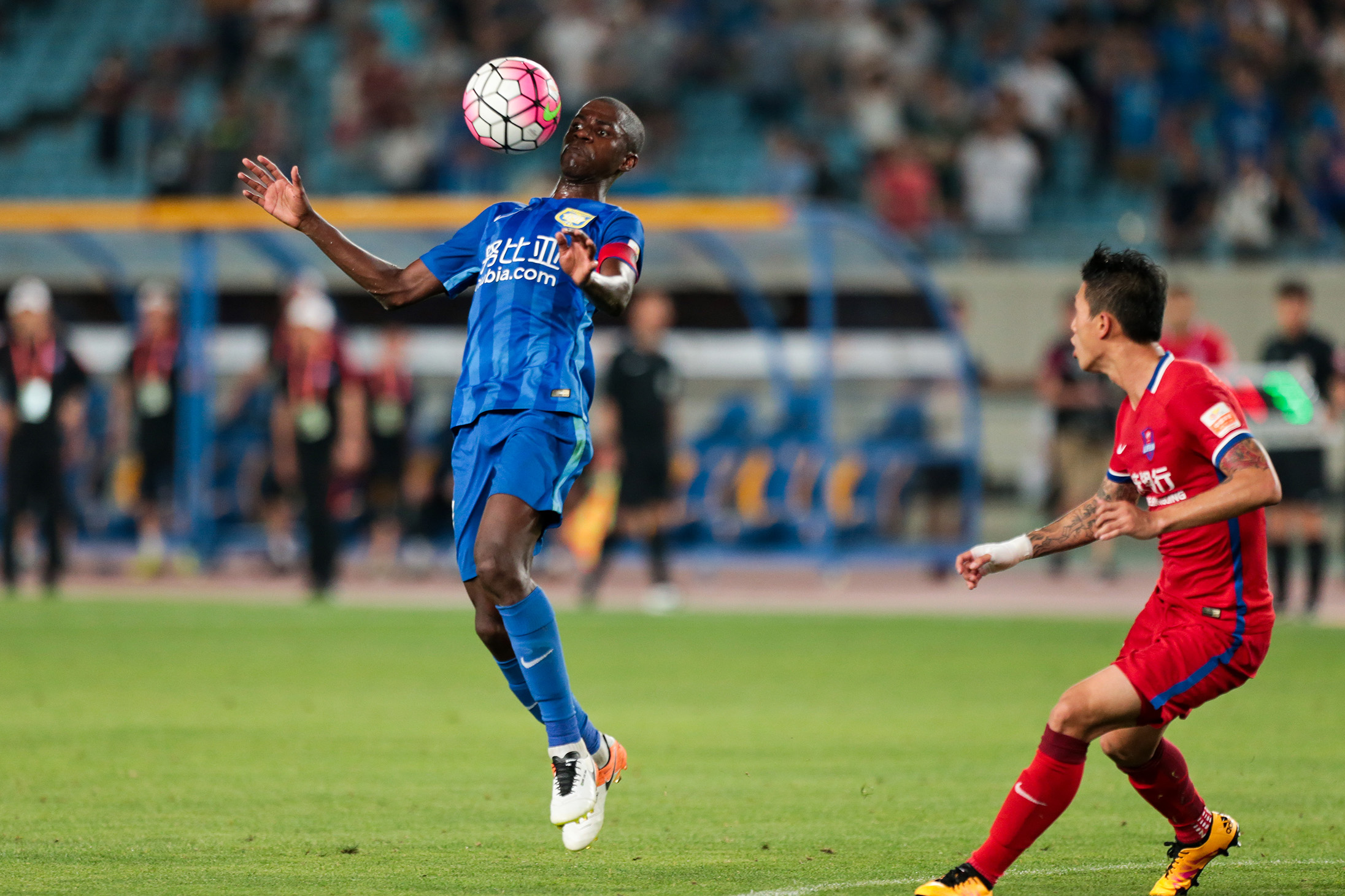
Major European clubs, once behemoths that commanded the dreams of every footballer across the world, are now struggling to prevent players for falling for the Chinese charm, or at least their fantastic contracts. Just ask Arsène Wenger, Arsenal’s iconic manager who was frightened that his squad would soon see Beijing-encouraged desertions — just like what happened to its London rival, Chelsea. Blues regulars Oscar, John Mikel Obi, and Ramires have all been poached by Chinese sides. Competition with China has even led many to fear a damaging bubble in football salaries, as every new signing seems to establish a new record.
Where does all the money come from? Well, Chinese Super League clubs are mostly owned by private conglomerates, virtually all with ties to the government. Not surprisingly, this paves the way for extraordinary funding — to the tune of billions of dollars. Furthermore, football is now fancied by China’s billionaires, such as Jack Ma, founder of Alibaba and owner of Guangzhou Evergrande, both as a solid investment and a way of boosting their prestige, like the 21st century China’s equivalent of a Swiss watch. Think of football magnates similar to Chelsea’s Roman Abramovich or the Seattle Seahawks’ Paul Allen – and then remember that China is estimated to have almost 600 billionaires.
World class football players … are just one more luxury good.
Two players now plying their trade in China are among the top-ten highest paid footballers on the planet: Shanghai Shenua’s Carlos Tevez ($41 million a year) and Shanghai SIPG’s Oscar ($26 million in base salary). This compares favorably to the best contracts in American sports: Indianapolis Colts quarterback Andrew Luck tops the NFL list with $40 million per season, and Cleveland Cavaliers superstar LeBron James took home a $30.9 million salary, although these numbers are significantly boosted by US endorsement deals.
In fact, sums offered to top footballers by Chinese clubs have been getting so out of control that the Chinese Football Association recently decided to reduce the number of foreign players allowed to play at any time from four per side to three. It accused clubs of burning money and preventing the rise of home-grown talents.
Yet, one must view outlays on football as a part a bigger picture. As Chinese growth slows, Chinese firms are increasing their spending on non-financial foreign asset purchases, with outward investment leaping to $161 billion in 2016. And their portfolio is quite eclectic, ranging from real estate to Hollywood studios. The Middle Kingdom is slowly moving away from a manufacturing-led economy to a service-based one, and entertainment, after all, is just another service.
Moreover, spending also has everything to do with the rise of a culture of ostentation, evinced by the country’s nouveau riche embracing Western luxury goods and culture. World class football players, under this perspective, are just one more luxury good.
As for the ruling Communist Party, much of its involvement derives from Beijing’s desire to use football as a way of boosting the country’s soft power, as it increasingly seeks legitimacy on the world stage. Considering all the efforts that the country has made to become an Olympic superpower, investment in football should come as no surprise. Other countries, especially those with hundred-year-old clubs and decades of football pedigree, are still far ahead, but excelling in the world’s most popular sport is surely part of the dreams of Chinese leaders.
Will a football culture effectively take hold in China? It may take a while, but there are signs that this is already occurring. Attendance is on the rise, as Chinese stadiums are becoming almost as full as those of France’s League 1. Plus, a recent $700 million broadcasting deal to stream the English Premier League in the country, the League’s largest such foreign contract, shows that Beijing’s football craze may be here to stay.
Game on.
