
No more.
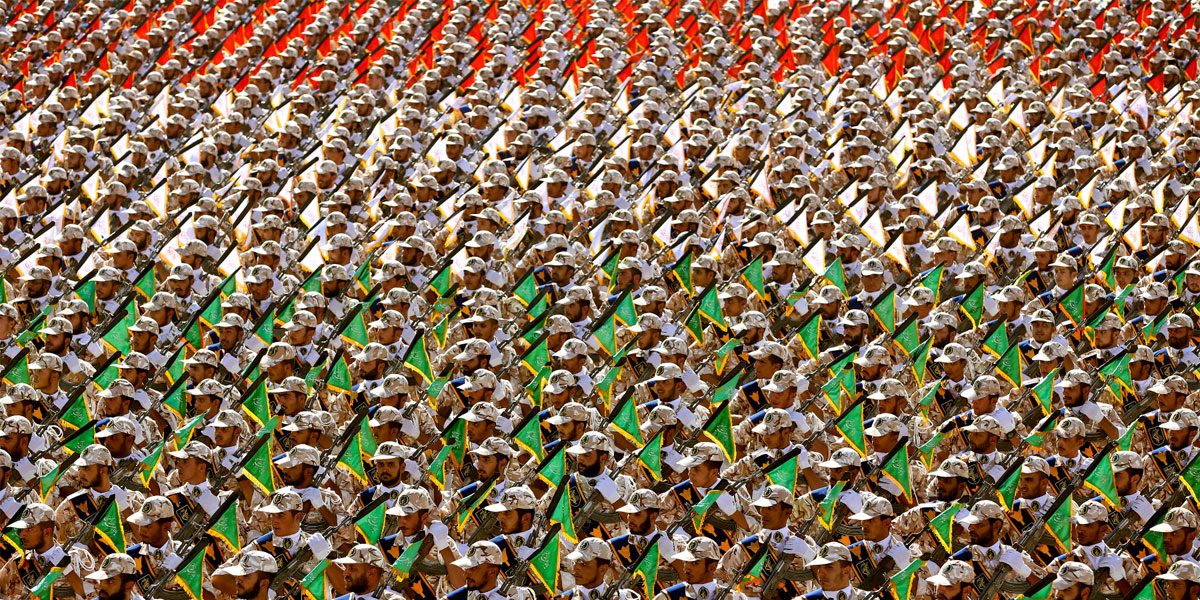
Exploiting the misguided foreign policy of Barack Obama, who seriously seemed to believe that the Islamic Republic of Iran could be a constructive force on the world stage, the nation formerly known as Persia is once again expanding and becoming the dominant player across a broad swath of the Middle East. We are told that the ongoing battle for Mosul will be a decisive one. What we are not told is that it may be a decisive victory for Iran and its Shia allies. What follows on the heels of this battle may well be a new, militant Persian empire.
The long-term implications for the entire Middle East are profound. The immediate implications for Israel may well be catastrophic.
For a generation we have operated under the assumption that the continued existence of Israel as a nation state was not in serious question. Not since the Yom Kippur war of 1974 has there been a true immediate threat to the territorial integrity of Israel. Terrorist groups might carry out suicide attacks, and Hezbollah might challenge Israel’s ability to intervene in Lebanon at will, but there has been no true military threat to Israel as a viable nation state.
All of that may be about to change. Lebanon is already a creature of Hezbollah and by extension Tehran. What was once a nation state with a terrorist group embedded in it is rapidly morphing into a terrorist group with a thin veneer of nationhood.
Syria, shattered and exhausted from years of civil war, is now evolving into a nation wholly dominated by Iranian surrogates and their Russian allies. Assad appears likely to survive as ruler of a rump state, but what he will “rule” will be an entity bought and paid for by Iran and its Shia hirelings.
This will be a coalition, not of ragtag terrorist groups capable only of suicide attacks on soft targets, but of battle hardened troops armed to the teeth with modern weaponry and backed by the Islamic Republic of Iran and, to at least some extent, Russia
Iraq is only steps behind. Mosul will likely fall by spring, and what remains of the ISIS caliphate in Iraq will go with it. What will emerge, however, will not be a representative democracy for all Iraqis. Rather, it will be a militant Shia state dominated by Iranian agents and the Shia militia they have created. Within months of the fall of Mosul we can expect the calls to begin for American forces to leave Iraq. Within weeks of those warnings, if we do not heed them, we can expect for the attacks on our forces to begin.
What the future holds then is a Levant in which Israel finds itself facing massed Shia enemies, well armed, and, thanks to the provisions of Barack Obama’s disastrous Iran nuclear deal, well funded. This will be a coalition, not of ragtag terrorist groups capable only of suicide attacks on soft targets, but of battle hardened troops armed to the teeth with modern weaponry and backed by the Islamic Republic of Iran and, to at least some extent, Russia.
The weaponry of this massive coalition of hostile forces will include literally thousands of rockets and missiles capable of striking Israel. Israeli forces may enjoy a richly deserved reputation as the best in the Middle East. Even they, however, cannot add strategic depth to the nation state they defend. Israel is a tiny, densely populated nation. It remains highly vulnerable to rocket and missile attacks, particularly if those weapons are carrying non-conventional warheads such as biological and chemical agents.
The first shots in the coming war have already been fired. At regular intervals, Israel carries out both air strikes and missile attacks on targets inside of Syria. Although public comment by the Israelis on the targets struck is limited, all indications are that the strikes are directed at weapons shipments moving through Syria to Hezbollah in Lebanon. In particular, the Israeli attacks appear designed to prevent Hezbollah from acquiring additional air defense systems and more advanced surface to surface missile batteries.
In Washington, this administration continues to spin the story that we are nearing the end of a war on ISIS and that we are turning a corner in the Middle East. The Israelis are under no such illusions. The Persian Empire, not seen on the shores of the Mediterranean for a millennium and a half, is ascendant, and Israel may well be the next nation to face its might.
