
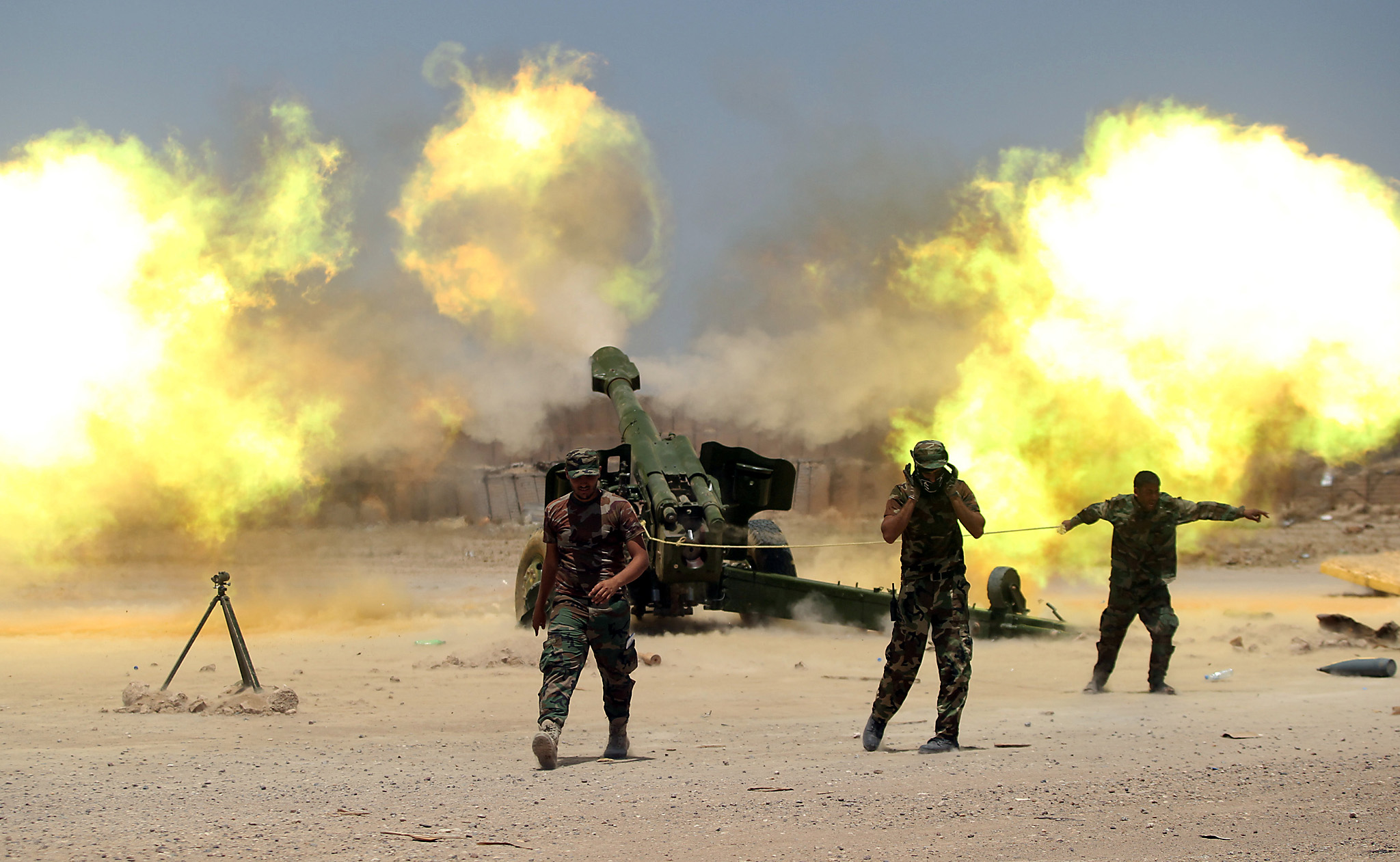
By the time President Obama was elected at the end of 2008, the American-led coalition forces in Iraq had achieved some level of security, though not stability. This came after a huge sacrifice of both people and expenditure. But Obama’s decision to withdraw troops three years later was a premature one, mistaking the military security that the presence of coalition forces lent with political stability.
The 2010 Elections
To make matters worse, the 2010 Iraqi election was blatantly rigged by sectarian thugs. Although the moderate, secularist al-Iraqiya bloc, which I led throughout its three-year existence, won the 2010 elections by a slim majority, it was Nouri al-Maliki’s State of Law coalition that gained power. Al-Maliki’s coalition took 89 seats in the Iraqi parliament to our 91, but was still able to govern through shady backroom deals.
We campaigned on a platform of peace, reconciliation, security and equal citizenship for all Iraqis — whether Shia, Sunni, or Christian; Arab, Kurd, or Turkmen. On the other hand, al-Maliki ran with the support of the most partisan Shia parties, and his grouping’s votes came almost exclusively from extreme sectarian groups. The outcome of the election indicated that the voters of Iraq supported al-Iraqiya’s vision of unity and inclusivity. They realized that our diverse and dedicated bloc was the only way forward to a peaceful and stable Iraq. We ran our campaign as we would in any other democracy. And yet, when it came time to cement the democratic, economic, and security gains of previous years through a peaceful transition of power that respected the will of the voters, the forces of division won out. Obama had the chance to effect real change, but he failed to show leadership. To put it bluntly, he choked.
Ironically, the Obama administration thought it knew better than Iraqi voters, and indeed displayed contempt for their wishes. But the world looked the other way when, after more than nine months of secret negotiations and closed-door meetings, the government and the premiership was given to al-Maliki’s coalition, a party that did not win, and a sectarian, non-inclusive government was formed following blatant violations of the Iraqi constitution.
Donald Trump’s administration has a unique opportunity to help resolve the instability afflicting Iraq
The result was a government that fast slid back into a state of Saddam-like one-man rule, a government that had no interest in healing the wounds in Iraqi society and instead neutered the political process, a government that concentrated power in Baghdad and in the hands of al-Maliki, and a government that fostered extremism and even terrorism among those it excluded from the political process. Al-Maliki’s governance, unsurprisingly, provoked a rise in both Kurdish nationalism and Sunni militancy, and became heavily influenced by Iran, rather than the Iraqi people. It also led to the wholesale failure of the Iraqi state, creating a sizable vacuum into which ISIS could rush.
A campaign of terror against political opponents commenced — including ordering the arrest of the vice president, a member of our al-Iraqiya coalition, on trumped-up charges less than 24 hours after the last of the American troops withdrew. He was eventually sentenced to death in absentia in an unprecedented factional act. The formation of secular, civic, and political institutions was blocked at every turn, always through intimidation and sometimes through assassinations. Moreover, the Americans had figured out long ago that maintaining the goodwill of Sunni tribes in central Iraq was key to defeating al-Qaeda, but al-Maliki’s government utterly ignored them.
Once the American troops left, law and order slowly started to disintegrate, the economy began to fail, corruption became rife, state institutions became increasingly sectarian and weak, and Iraq gradually but methodically became a playground for regional powers to pursue their own ambitions. In a leaked diplomatic cable of 2009, King Abdullah of Saudi Arabia described al-Maliki as having “opened the door for Iranian influence in Iran.”
A Way Forward?
Iraq’s tragic history has led to it becoming the ideal breeding ground for the virus that is ISIS —now a full-blown epidemic that needs to be confronted through a global effort. The ground war against ISIS cannot just be won through military means, but also politically, by helping Iraq develop a genuine, inclusive, democratic political process, which will enable the growth of healthy state institutions. This needs to start with the Iraqi security forces, including the creation of robust intelligence capabilities, as well as an independent judiciary that ensures the rule of law.
Donald Trump’s administration has a unique opportunity to help resolve the instability afflicting Iraq. To do this, he needs to appoint high-caliber special envoys for Iraq, Syria and Lebanon — the countries who have lost the most from the rise of ISIS. These envoys need to oversee a renewed push for reconciliation, free and fair elections, and the development of Iraqi special forces who can keep the peace in their own country. They also need to put into action the tripartite 2016 agreement between Baghdad, Erbil, and Washington in order for the Kurdish Peshmerga and the Iraqi army to formally cooperate and fight ISIS.
The struggle against ISIS cannot just be of a military nature, however. A wholesale change needs to take place across the Middle East, in part with the development of a regional conference under the auspices of the United Nations Secretariat General that can bring some measure of unity to the region. It needs to reduce barriers to trade and to mutual military assistance in the same way that transnational organizations such as the Arab League and the Gulf Cooperation Council do.
The Obama administration thought that by withdrawing troops from Iraq in 2011, it was ending the war. But their epic bungling of the conflict has only perpetuated it. With a new president in the White House, a window of opportunity has just opened. To stand up for our values, President Trump must help us defeat ISIS and other insidious forces of extremism. With the help of the US and our Iraqi forces, we must now win the long-running Iraq War and finish the matter once and for all.
